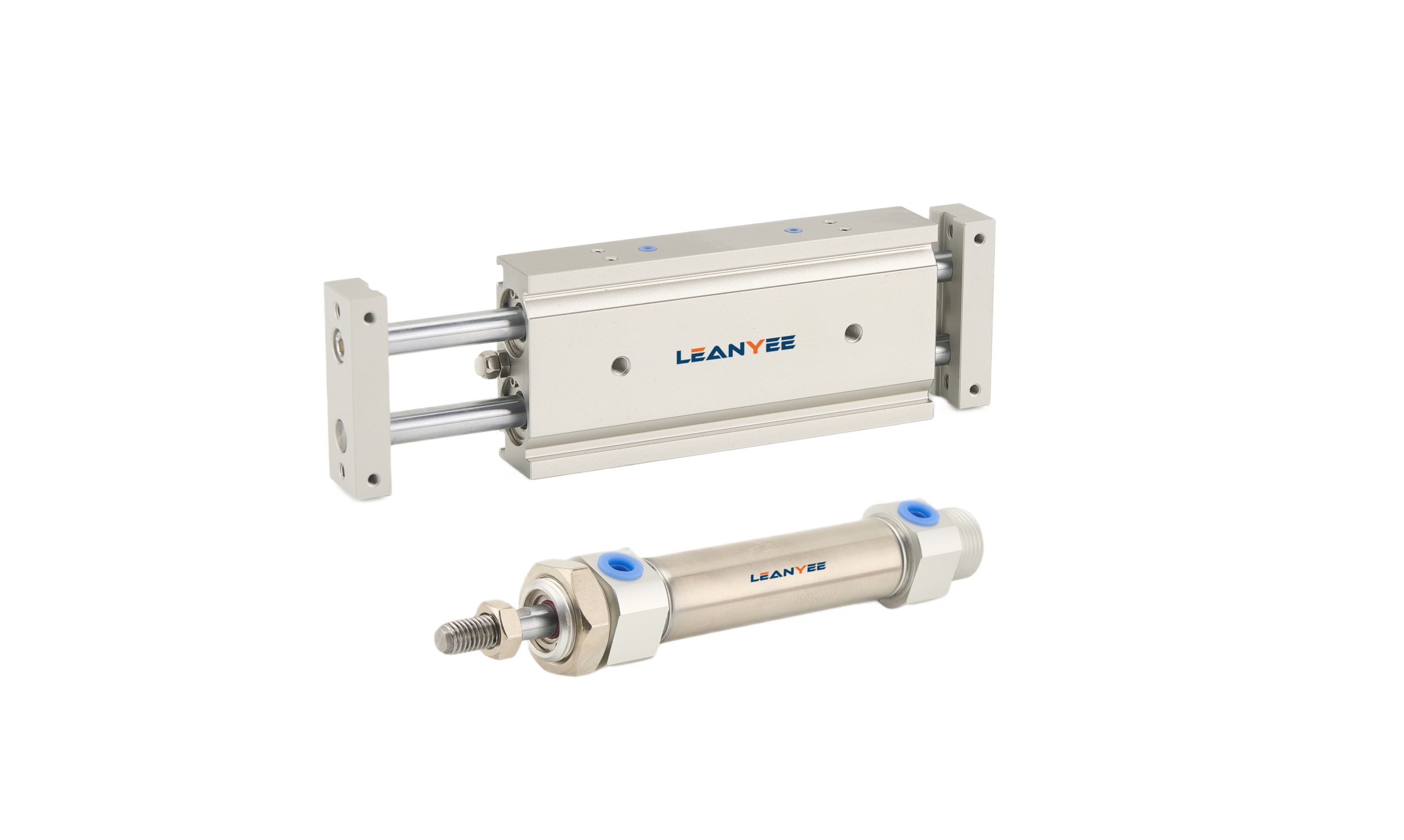
Cylinder Maintenance Intervals and Inspection Checklist
How Often Should a Cylinder Be Maintained? Seals, Lubrication, and an Inspection Checklist Pneumatic Technology Explained · Pneumatic Cylinder Series The short answer: there is no one-size-fits-all maintenance interval for cylinders — it depends on the duty. Clean, light-duty cylinders can go a long time untouched; dusty, heavy-load ones may need monthly inspection. Watch three […]
-
07 Aug, 2025

-

How Often Should a Cylinder Be Maintained? Seals, Lubrication, and an Inspection Checklist
Pneumatic Technology Explained · Pneumatic Cylinder Series
The short answer: there is no one-size-fits-all maintenance interval for cylinders — it depends on the duty. Clean, light-duty cylinders can go a long time untouched; dusty, heavy-load ones may need monthly inspection. Watch three things: seals, lubrication, and the piston rod. Inspecting ahead of failure costs far less than waiting for downtime.
Maintenance Watch List: Seals, Lubrication, and the Rod
Seals are the cylinder’s life-limiting parts — rubber seals age, harden, and lose elasticity, with leakage, slower motion, and falling force as the tell-tale signs. Lubrication sets how fast the seals and guide bushing wear: lubrication-free cylinders rely on factory grease, ordinary ones on the lubricator. The piston rod is exposed, and is the part most easily damaged by contamination and side force.
Set the maintenance interval by duty cycle and environment: shorten it for high-cycle, heavy-load, dusty, or hot conditions, and extend it for clean, light-duty service. ISO 4414 sets general requirements for the periodic inspection and maintenance of pneumatic systems, and can be used to build an inspection routine.
Maintenance Rhythm for Different Conditions
| Condition | Inspection interval | Focus | Typical actions |
| Clean, light duty | Every 6–12 months | Seals, leakage | Visual check + leak check |
| General duty | Every 1–3 months | Lubrication, rod surface | Re-grease, clean the rod |
| Dusty / hot / heavy load | Monthly or shorter | Dust control, cushioning, rod | Replace seals, cleaning |
Field Notes: Mistakes We Have Seen
- Leaving the cylinder alone as long as it does not leak. Seal aging is gradual — by the time it leaks, the rod is usually damaged too.
- Adding oil to a lubrication-free cylinder. It breaks up the factory grease and accelerates wear instead.
- Inspecting only by appearance. Listen for noise, feel the temperature, look at the rod surface — judge together.
- Replacing seals without checking the rod surface. A scratched rod will ruin new seals immediately. Choose a supplier who provides seal and wear-part lists, so you can stock by cycle.
Frequently Asked Questions (FAQ)
Q1: How often should a cylinder actually be maintained? No single answer — set it by duty: clean, light-load, low-cycle service needs inspection only every 6 to 12 months; general duty every 1 to 3 months; dusty, hot, heavy-load, high-cycle applications every month or even less, focusing on seals and the rod surface. The guide is the actual rate of wear: start with a denser cycle, learn this machine’s consumption pattern, then adjust. Keep continuous inspection records and derive your own interval — the most reliable approach.
Q2: How do I know when seals need replacing? Three signals. First, leakage: perceptible air escape at end caps or the rod seal. Second, falling force, slower motion, or a mid-position that will not hold — indicating piston seal leakage. Third, on strip-down, seals that have hardened, cracked, lost elasticity, or taken a permanent set. When the first two appear, replacement is generally due. Seals are consumables — replacing them proactively at end of life costs less than waiting for failure, downtime, and collateral damage. When replacing, check the rod surface and bore wall for scratches at the same time; deal with any damage first.
Q3: Does a lubrication-free cylinder need oil? Generally no — and adding it at random is not advised. A lubrication-free cylinder leaves the factory with long-life grease pre-applied, paired with wear-resistant, self-lubricating seals, and runs long-term without a lubricator. Adding oil dilutes or destroys the original grease, reducing lubrication and attracting dirt. The rule: if late-life dry running or slight stick-slip appears, top up with the same type of grease as the manufacturer recommends — not just any oil. Whether and what to add: follow the manufacturer’s catalog. Do not go by feel.
Q4: How should the piston rod be maintained day to day? Three things. Keep it clean — dust, moisture, and oil clinging to the rod get carried inside and wear the seals, so wipe the extended rod regularly. Inspect the rod surface for scratches, pitting, or plating loss, and repair or replace promptly. Confirm aligned, side-force-free loading to prevent uneven wear. In dusty service, add a wiper ring or bellows boot. The rod is the cylinder’s most delicate exposed part — manage it well and seal life lengthens noticeably. One extra wipe a day is a bargain; keep it up and it pays.
Q5: What spares and tools should maintenance keep on hand? Recommended stock: rod seals and piston seals for the relevant model (or a complete seal kit), cushion pads, and wiper rings — plus extra wear parts for high-cycle use. Main tools: hex keys, a torque wrench, cleaning cloth, the manufacturer’s recommended grease, and soapy water or leak detector for testing. Set up a one-record-per-cylinder inspection sheet logging replacement dates and operating conditions, so consumption patterns become visible. Ask your supplier for a wear-part list and stocking advice, and buy ahead of the cycle to cut unplanned downtime.
Prepared by the LEANYEE pneumatics technical team based on hands-on commissioning experience, for reference by industry peers.
Technical Disclaimer
The fitting selection, thread types, and technical parameters discussed in this article are based on applicable international standards, including ISO 4414 (Pneumatic Fluid Power — General Rules and Safety Requirements), ISO 8573 (compressed air quality), ISO 6358 (flow characteristics), and relevant thread standards such as ISO 7-1, ISO 228-1, and ANSI/ASME B1.20.1, together with publicly available technical information from international manufacturers such as SMC, Festo, and Parker.
This article is intended for general technical reference only. Actual performance may be affected by cylinder bore size, load, operating pressure, temperature, piping layout, and other application-specific factors.
On-site testing and commissioning are recommended where necessary. Always refer to the product documentation and technical parameters confirmed by the manufacturer for the specific product being used.
LEANYEE Technical Team
[Topic] Maintenance and inspection | [Intended readers] Equipment management and TPM personnel
More News & Insights
-
Leanyee
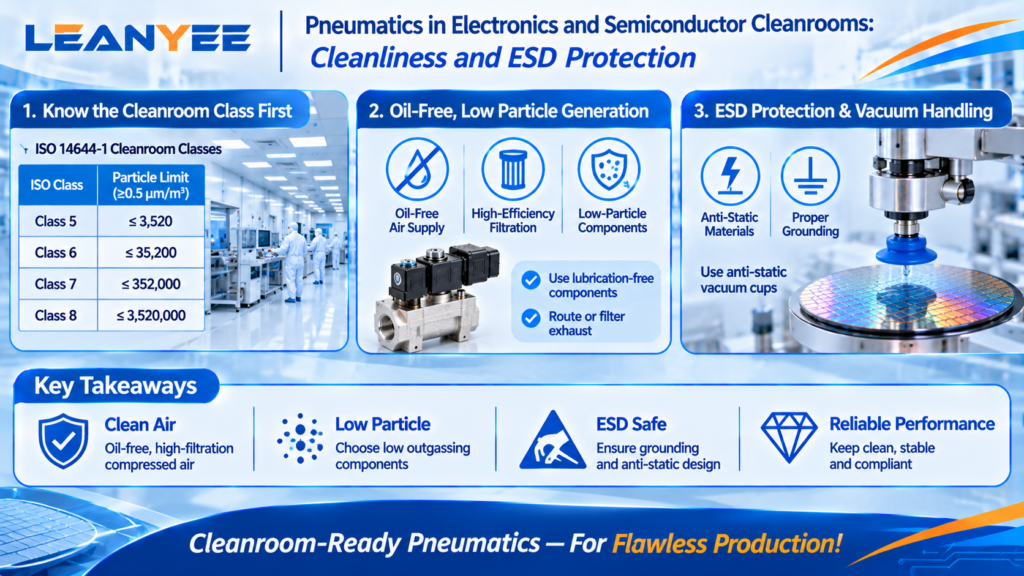 29 Oct, 2026Pneumatics in Electronics CleanroomsPneumatics in Electronics and Semiconductor Cleanrooms: Cleanliness and ESD ProtectionRead Article
-
Leanyee
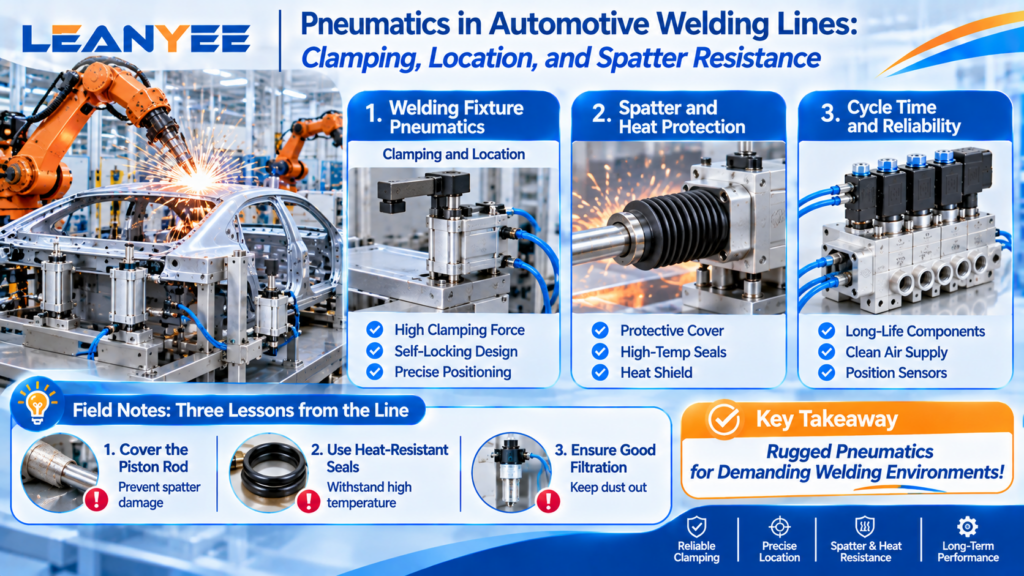 22 Oct, 2026Pneumatics in Automotive Welding LinesPneumatics in Automotive Welding Lines: Clamping, Location, and Spatter ResistanceRead Article
-
Leanyee
 15 Oct, 2026Pneumatics for Food and Beverage LinesPneumatics on a Food and Beverage Line: Oil-Free, Hygienic, Washdown-ReadyRead Article