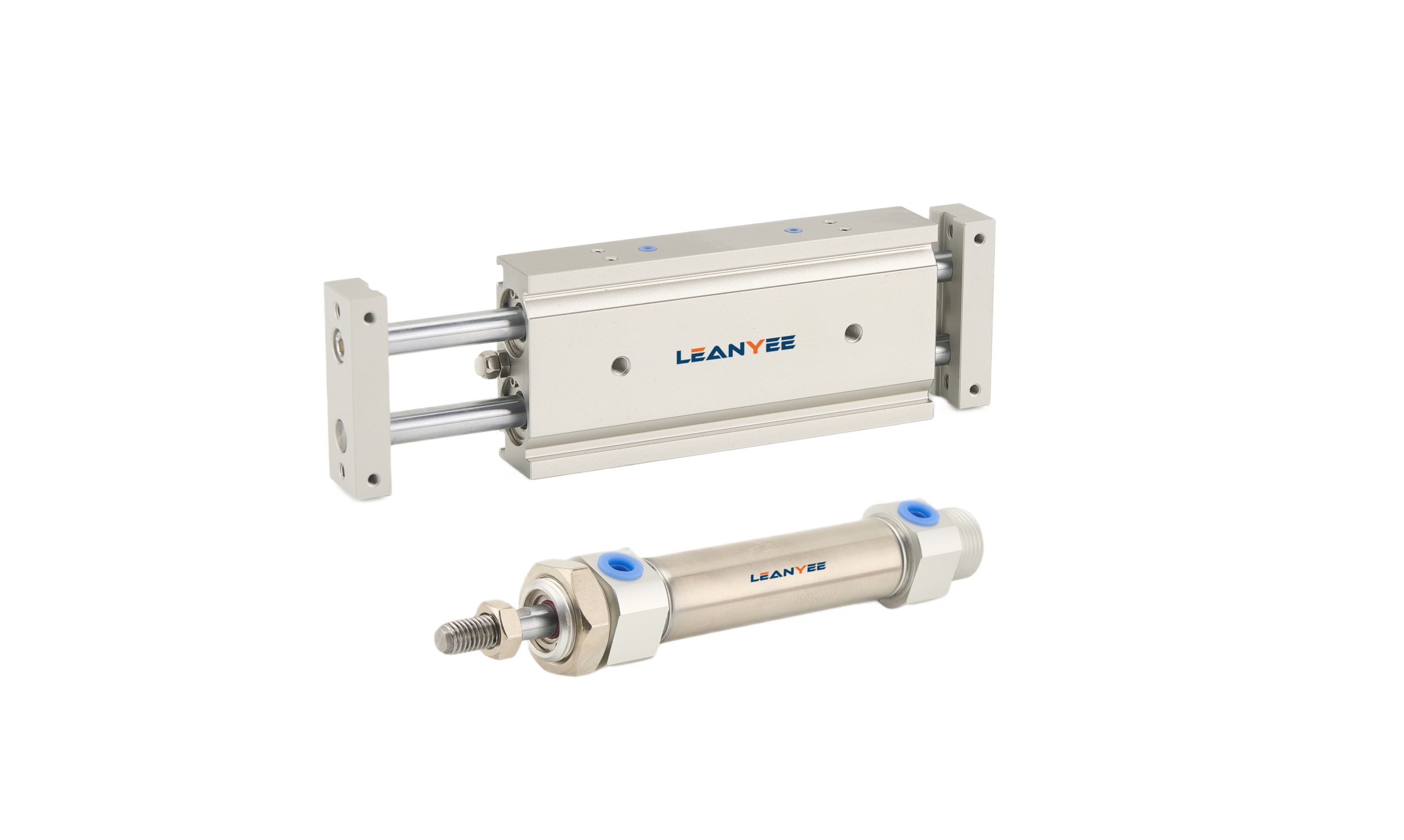
Industry-Specific Requirements for Cylinders
From Automotive Weld Shops to Semiconductor Cleanrooms: What Different Industries Demand from Cylinders
-
14 Aug, 2025

-

From Automotive Weld Shops to Semiconductor Cleanrooms: What Different Industries Demand from Cylinders
Pneumatic Technology Explained · Pneumatic Cylinder Series
The short answer: the same cylinder faces very different demands depending on the line it serves. On an automotive welding line it must take vibration and impact; on a food line it must survive washdown without rusting; in lithium battery production copper and zinc are banned; in a semiconductor cleanroom it must stay clean with low particle generation. Different industries select for completely different things — getting it wrong is not just a performance issue, but often a compliance and safety issue.
How Four Key Industries Differ
Automotive welding: weld spatter, high-frequency vibration, and impact loads call for impact-resistant bodies, cushioning, and wear-resistant seals, often in guided cylinder types. Food and beverage: constant moisture and washing call for stainless bodies, food-grade lubrication and seals, and washdown-friendly construction. Lithium battery: copper and zinc ions contaminate cells, so copper- and zinc-free materials are required. Semiconductor / cleanroom: no particle generation or outgassing is tolerated, so clean, low-extractable, low-particle designs are required.
Industry selection is at heart “matching the environment”: take media, temperature, cleanliness, vibration, and compliance into the selection. ISO 4414 sets general safety requirements for using pneumatic components in different application environments, and can be followed as a reference.
Selection Priorities Across the Four Industries
| Industry | Core constraint | Selection focus | Common mistake |
| Automotive welding | Spatter / vibration / impact | Impact resistance, cushioning | Ignoring spatter damage to rods |
| Food & beverage | Moisture / washdown / hygiene | Stainless steel, food-grade | Plain steel parts |
| Lithium battery | Copper- and zinc-free | Non-copper/zinc materials | Overlooking metal contamination |
| Semiconductor | Clean, low outgassing | Low particle generation | Seal choice that sheds particles |
Field Notes: Mistakes We Have Seen
- Stretching a general-purpose cylinder into a special industry. The environment does not match, and both service life and compliance suffer.
- Plain carbon steel cylinders on a food line. They rust, resist cleaning, and carry contamination risk.
- Overlooking the copper/zinc ban in lithium battery lines. Copper and zinc particles are a hidden cause of cell failure.
- The wrong seal for a cleanroom. Ordinary seals shed particles and outgas, contaminating the product. At selection, choose materials and certification schemes to match the industry’s requirements.
Frequently Asked Questions (FAQ)
Q1: What is the biggest enemy of cylinders on an automotive welding line? Weld spatter and vibration. Spatter particles stick to the rod and scratch the seals into leaking; high-frequency vibration loosens fasteners and fatigues the cushion parts; impact loads hammer the piston into the end cap. Countermeasures: choose cushioned, impact-resistant cylinder types with guides to share side forces; fit spatter shields or protection at the rod; treat fasteners against loosening; set the cushioning properly and inspect it regularly. Where necessary, use heavy-duty cylinders designed specifically for weld shops — far more reliable than general-purpose ones. Do not take the shortcut of a general-purpose cylinder.
Q2: What are the hard requirements for cylinders in food and beverage? Hygiene and washdown survivability: first, stainless bodies and rods that resist rust; second, food-grade seals and lubrication so nothing leaches into the product; third, a structure that is easy to clean with minimal dead space and survives rinsing; fourth, lubrication-free designs where possible to cut oil contamination. Plain carbon steel cylinders rust quickly in a wet, washed-down environment and become a contamination source. In food, selection must cover material, seals, lubrication, and protection rating together, and must comply with local food hygiene regulations. Hygiene compliance is the floor.
Q3: Why does the lithium battery industry ban copper and zinc? In battery production, if copper or zinc ions enter a cell they react with the electrolyte, causing self-discharge, internal shorts, and even safety hazards. Components that contact the product therefore must be copper- and zinc-free — copper, zinc, and their alloys are all prohibited. If a cylinder contains copper or zinc parts, worn or detached particles can contaminate the line. State the copper/zinc-free requirement explicitly at selection, choose stainless steel or materials certified to the ban, and verify the material of wear parts.
Q4: What matters when choosing cylinders for a semiconductor cleanroom? Low particle generation, low outgassing, and cleanliness. Ordinary cylinders continuously shed particles and volatiles from their seals and lubrication, contaminating wafers and product. Select: cleanroom-type or low-particle-generation cylinders whose sealing materials shed little and emit little vapor; lubrication-free or dedicated clean lubrication; a construction that is as enclosed as possible with minimal friction-generated particles; and air treated to a high ISO 8573 class. The higher the cleanliness class, the stricter the demands — match the cylinder to the line’s cleanliness level.
Q5: One line serves several industries — how do I select the cylinders? Select for the harshest environment, or select zone by zone. First list the constraints of each process section — temperature, cleanliness, corrosion, copper/zinc ban, impact — and take the union of the strictest requirements as the selection baseline, so no section passes while another fails. Where the differences are too wide, selecting separately per process section is more economical. Standardize on one brand and standard series to reduce the range of spares. Write out each industry’s constraints as a checklist and verify one by one before selecting — far safer than repairing afterwards, and your supplier can help with a multi-industry selection review if needed.
Prepared by the LEANYEE pneumatics technical team based on hands-on commissioning experience, for reference by industry peers.
Technical Disclaimer
The fitting selection, thread types, and technical parameters discussed in this article are based on applicable international standards, including ISO 4414 (Pneumatic Fluid Power — General Rules and Safety Requirements), ISO 8573 (compressed air quality), ISO 6358 (flow characteristics), and relevant thread standards such as ISO 7-1, ISO 228-1, and ANSI/ASME B1.20.1, together with publicly available technical information from international manufacturers such as SMC, Festo, and Parker.
This article is intended for general technical reference only. Actual performance may be affected by cylinder bore size, load, operating pressure, temperature, piping layout, and other application-specific factors.
On-site testing and commissioning are recommended where necessary. Always refer to the product documentation and technical parameters confirmed by the manufacturer for the specific product being used.
LEANYEE Technical Team
[Topic] Industry applications and differentiated selection | [Intended readers] Industry engineers and sales personnel
More News & Insights
-
Leanyee
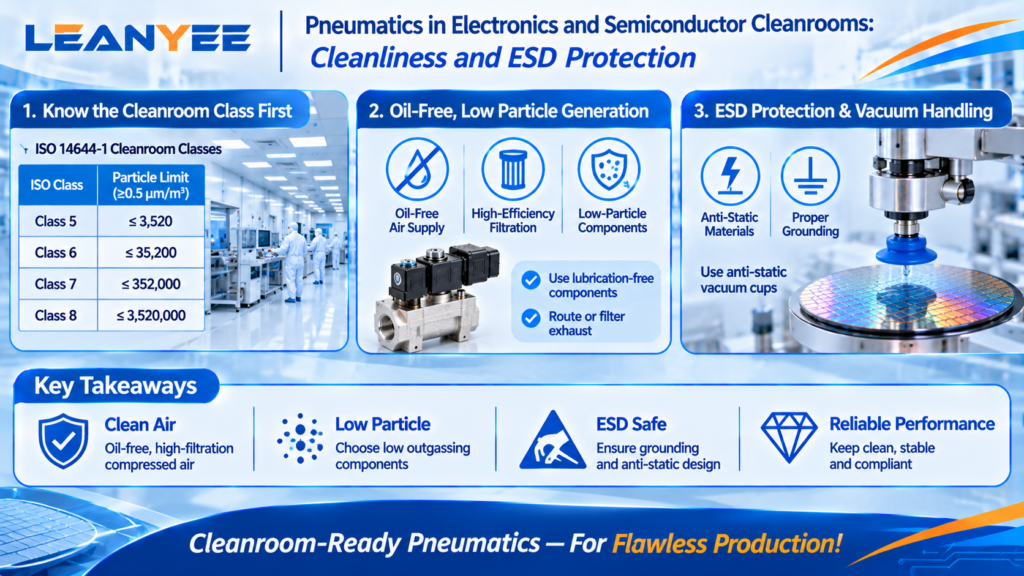 29 Oct, 2026Pneumatics in Electronics CleanroomsPneumatics in Electronics and Semiconductor Cleanrooms: Cleanliness and ESD ProtectionRead Article
-
Leanyee
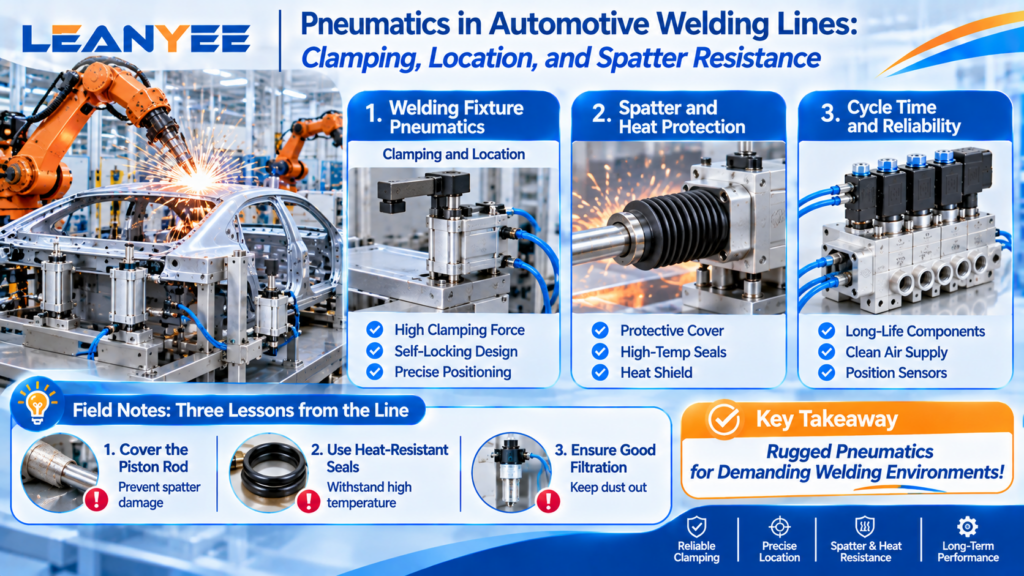 22 Oct, 2026Pneumatics in Automotive Welding LinesPneumatics in Automotive Welding Lines: Clamping, Location, and Spatter ResistanceRead Article
-
Leanyee
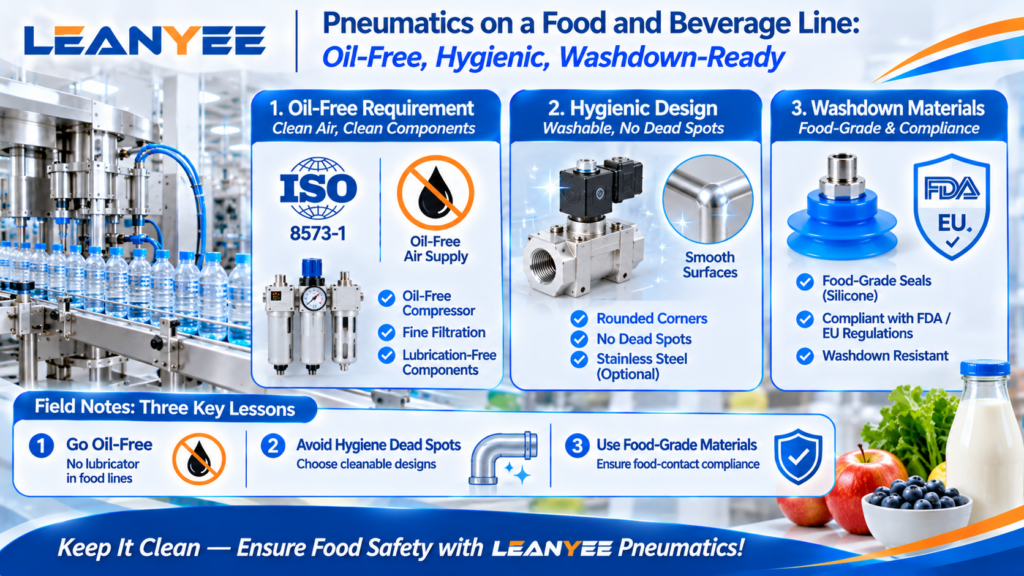 15 Oct, 2026Pneumatics for Food and Beverage LinesPneumatics on a Food and Beverage Line: Oil-Free, Hygienic, Washdown-ReadyRead Article