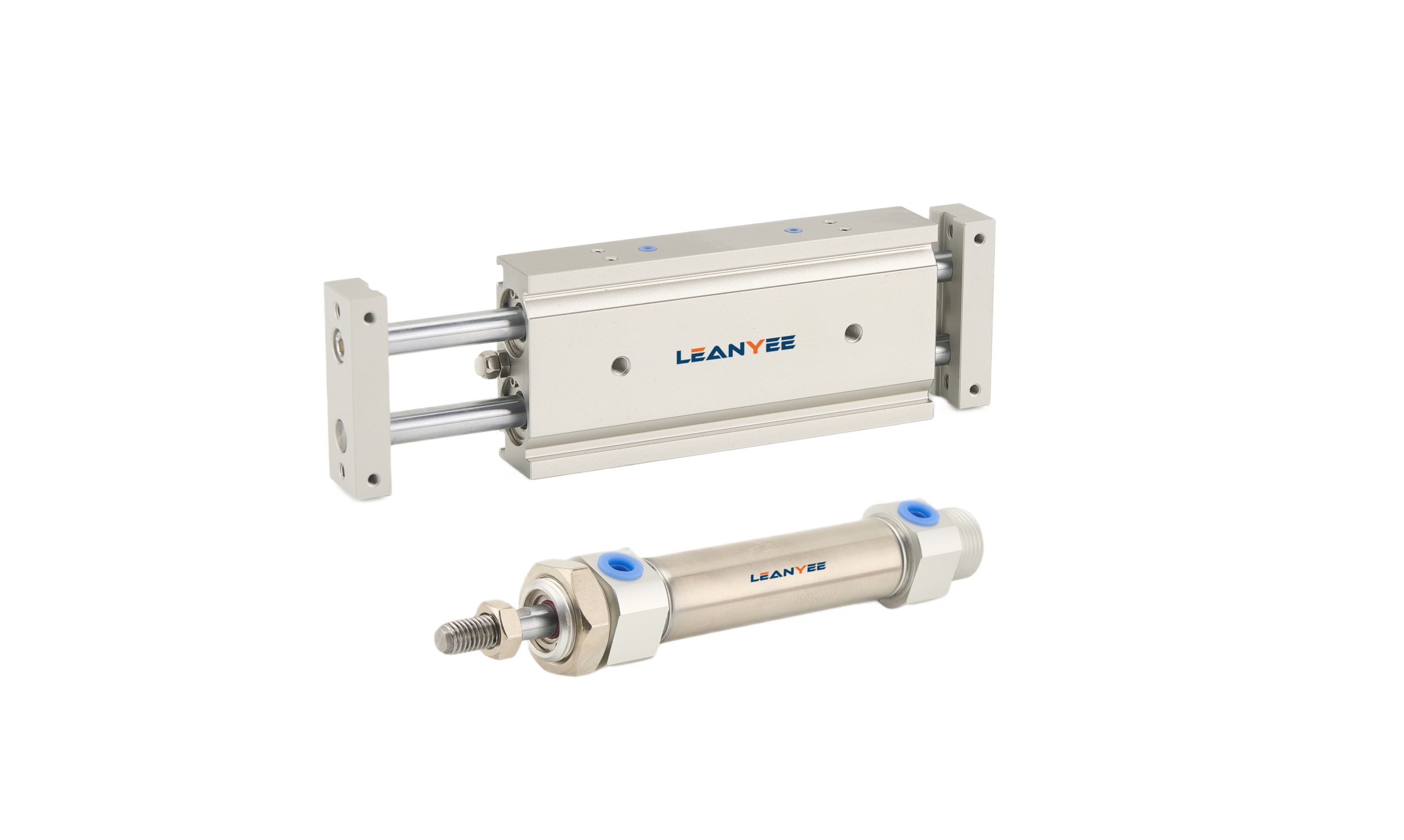
Pneumatic Cylinder vs Electric Actuator
Pneumatic Cylinder vs Electric Actuator: A Multi-Dimension Comparison of Precision, Cost, and Explosion Protection
-
29 Dec, 2025

-

Pneumatic Cylinder vs Electric Actuator: A Multi-Dimension Comparison of Precision, Cost, and Explosion Protection
When upgrading equipment, many engineers go back and forth between “staying with pneumatic cylinders” and “moving to electric actuators”. There is no standard answer — only “which one suits this duty better”. Lay out six dimensions — precision, speed, load, cost, explosion protection, cleanliness — side by side, and the answer usually becomes clear.
1. Six Dimensions Side by Side
| Dimension | Pneumatic cylinder | Electric actuator |
| Precision | Two-point positioning; intermediate positions hard to control | Multi-point, programmable, high precision |
| Speed | Fast, with high impact | Adjustable speed, controllable accel/decel |
| Load | Moderate; force tied to air pressure | Wide range, constant force possible |
| Cost | Low, simple structure | High, includes motor and drive |
| Explosion protection | Naturally explosion-proof, no sparks | Needs explosion-proof motor, higher cost |
| Cleanliness | Needs oil-free air; overall simple | No air consumption, but has parts needing lubrication |
Of these six, precision and speed are the dividing line: if you need intermediate stops, variable-speed motion, or precise arrival, the electric actuator clearly wins; for two-point, fast-cycling “push to the end / pull back” motion, the pneumatic cylinder’s price-performance is unbeatable.
2. When to Firmly Choose Pneumatic
Fast cycling, two-point positioning, low cost, explosion-proof environments, simple clamping/pushing — in these scenarios the pneumatic cylinder is the first choice. Simple in structure, cheap to maintain, shock-resistant: on lines full of two-point motions, its total cost of ownership is far below the electric actuator’s.
3. When to Decisively Go Electric
Where you need multi-station precise positioning, speed-profile control, force control, and data acquisition/traceability, the electric actuator is the right choice. It turns position, speed, and force into programmable, monitorable parameters — supporting flexible manufacturing and digitalization.
4. Don’t Overlook the “Hybrid Solution”
Many lines are actually a “pneumatic + electric” combination: cylinders for coarse positioning and electric actuators for fine positioning, or cylinders clamp while electric actuators traverse. Don’t fall into “either/or” — combining flexibly by process need is often cheaper and easier to maintain. (A comparison table and decision flowchart for pneumatic-vs-electric selection will be available for download when the LEANYEE website launches.)
Field Notes: Three Lessons from the Line
- Forcing an electric actuator onto a simple two-point motion — cost multiplies, maintenance gets complex, and only the “arrive” function is ever used. That is over-engineering.
- Using a cylinder where intermediate stops are needed — propped up with external stops, slow cycling and drifting positions. Switch to an electric actuator.
- Looking only at the unit price, not the whole life — electric actuators cost more upfront but save electricity and maintenance and offer traceability. Evaluate by total life-cycle cost.
Conclusion
Pneumatic and electric are not rivals — they are tools with different strengths. Hold on to the “precision and speed” dividing line: two-point fast cycling → pneumatic; multi-station precision → electric; combine flexibly by process — and the selection debate simply ends.
Suggested Illustrations
- Structural comparison of a pneumatic cylinder and an electric actuator.
- Radar chart over the six dimensions (precision / speed / load / cost / explosion protection / cleanliness).
- Sketch of the hybrid scheme “pneumatic for coarse positioning + electric for fine positioning”.
The above content was compiled by the LEANYEE pneumatic technical team from hands-on commissioning experience, for reference by industry peers.
Technical Disclaimer
The fitting selection, thread types, and technical parameters discussed in this article are based on applicable international standards, including ISO 4414 (Pneumatic Fluid Power — General Rules and Safety Requirements), ISO 8573 (compressed air quality), ISO 6358 (flow characteristics), and relevant thread standards such as ISO 7-1, ISO 228-1, and ANSI/ASME B1.20.1, together with publicly available technical information from international manufacturers such as SMC, Festo, and Parker.
This article is intended for general technical reference only. Actual performance may be affected by cylinder bore size, load, operating pressure, temperature, piping layout, and other application-specific factors.
On-site testing and commissioning are recommended where necessary. Always refer to the product documentation and technical parameters confirmed by the manufacturer for the specific product being used.
LEANYEE Technical Team
More News & Insights
-
Leanyee
 29 Oct, 2026Pneumatics in Electronics CleanroomsPneumatics in Electronics and Semiconductor Cleanrooms: Cleanliness and ESD ProtectionRead Article
-
Leanyee
 22 Oct, 2026Pneumatics in Automotive Welding LinesPneumatics in Automotive Welding Lines: Clamping, Location, and Spatter ResistanceRead Article
-
Leanyee
 15 Oct, 2026Pneumatics for Food and Beverage LinesPneumatics on a Food and Beverage Line: Oil-Free, Hygienic, Washdown-ReadyRead Article