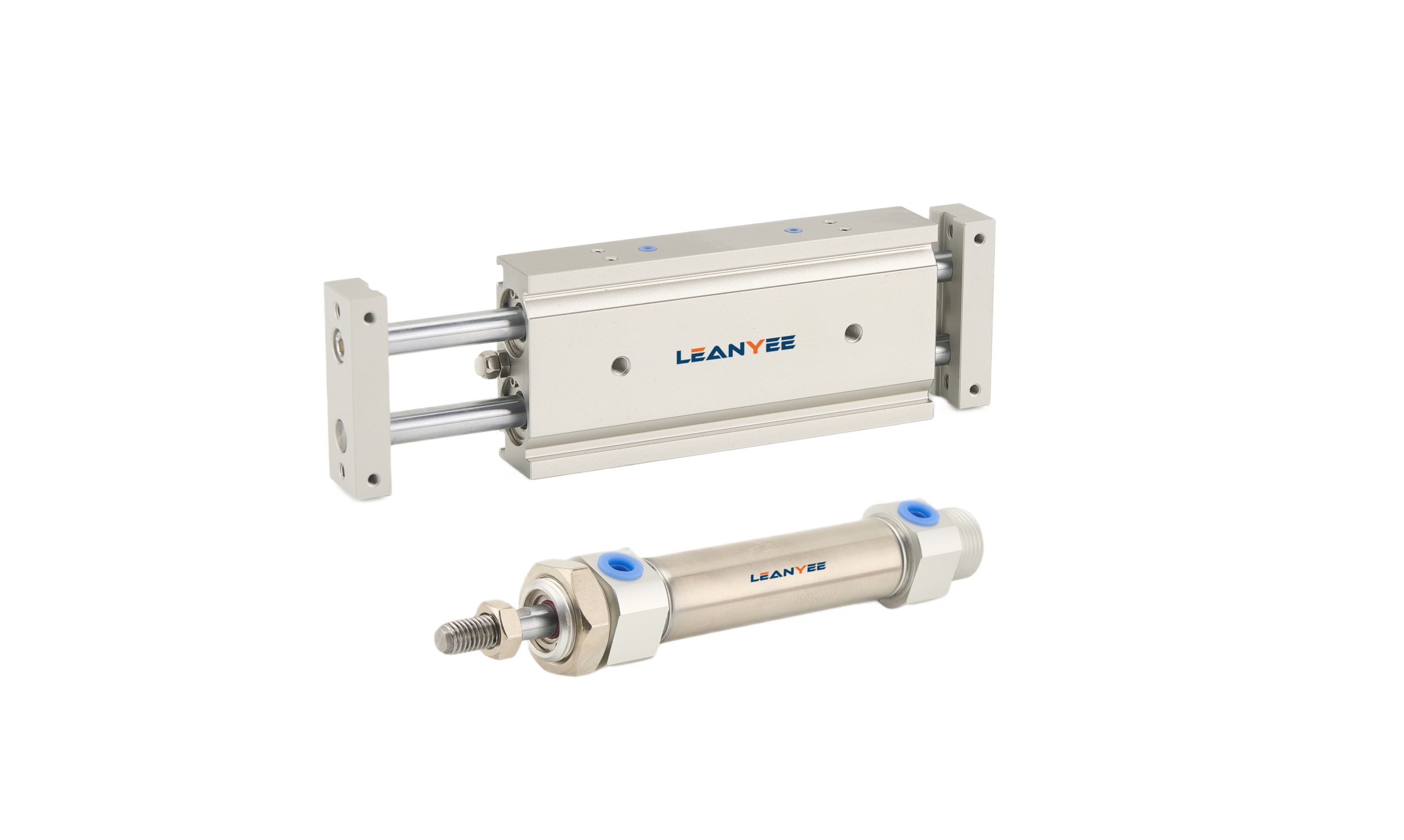
Pneumatic Slides and Linear Modules
How to Configure Pneumatic Slides and Linear Modules: Selection Points for Long-Stroke Handling
-
18 Dec, 2025

-

How to Configure Pneumatic Slides and Linear Modules: Selection Points for Long-Stroke Handling
When the motion requires “carrying a workpiece smoothly along a straight line”, a bare cylinder is not enough — it has no guiding and handles side loads poorly. Pneumatic slides and linear modules integrate the cylinder, guides, and plate into one unit, purpose-built for guided long-stroke linear handling. At selection, what matters most is the guides and the various “moments” — not just the bore.
1. What a Slide / Linear Module Is
A pneumatic slide or module is essentially an integrated “cylinder + guides + plate”: the cylinder provides the power, the guides guarantee straightness and load bearing, and the plate carries the workpiece. Compared with assembling your own cylinder-plus-guides, the integrated unit is better aligned, easier to install, and its precision is assured.
2. Guides and Those “Moments”
Selecting a slide by thrust alone is not enough — check the load moments in three directions: the overturning moment (tilting from a load center offset from the plate center), the yaw moment (horizontal eccentricity), and the roll/pitch moment. The higher and more offset the load’s center of gravity, the larger the moments — and the more the guides wear unevenly and stick.
At selection, map the load mass and center-of-gravity position onto the catalog’s allowable-moment table with ample safety factor. Guide type (sliding vs linear ball guides) also affects precision and life — for high precision, choose linear ball guides.
3. Slide / Rodless Cylinder vs Ball-Screw Module
| Option | Strengths | Limits | Applications |
| Pneumatic slide / rodless cylinder | Fast, cheap, explosion-proof, no electrics | Ordinary precision, two-point positioning | Fast-cycling, simple two-point transfer |
| Ball-screw / belt module | High precision, adjustable speed, multi-point positioning | Expensive, needs motor drive | Precise positioning, multi-station, data acquisition |
For fast-cycling “point A to point B” transfer, the pneumatic slide has the best price-performance; only when you need multi-station precise positioning and programmable speed should you consider an electric module. (A comparison table of pneumatic vs electric options will be available for download when the LEANYEE website launches.)
Field Notes: Three Lessons from the Line
- Checking only bore thrust, not moments — heavy, high-center-of-gravity loads wear the guides unevenly and cause sticking. The allowable-moment table must be verified at selection.
- Overlong load overhang — the plate “nods”, and both precision and life fall. Shorten the arm or add counterweight.
- Upsizing the cylinder when precision falls short — treats the symptom, not the cause. First determine whether it’s guide clearance or insufficient force, then act.
Conclusion
One sentence for slide and module selection: thrust ensures it can move; moments ensure it lasts. Map load mass, center of gravity, and arm into the allowable-moment table, then set the scheme by “two-point handling → pneumatic; multi-station precision → electric”. That path rarely goes wrong.
Suggested Illustrations
- Exploded diagram of a slide module (cylinder / guides / plate).
- Force diagram of the three load moments — overturning, yaw, pitch.
- Application comparison of a pneumatic slide and a ball-screw module.
The above content was compiled by the LEANYEE pneumatic technical team from hands-on commissioning experience, for reference by industry peers.
Technical Disclaimer
The fitting selection, thread types, and technical parameters discussed in this article are based on applicable international standards, including ISO 4414 (Pneumatic Fluid Power — General Rules and Safety Requirements), ISO 8573 (compressed air quality), ISO 6358 (flow characteristics), and relevant thread standards such as ISO 7-1, ISO 228-1, and ANSI/ASME B1.20.1, together with publicly available technical information from international manufacturers such as SMC, Festo, and Parker.
This article is intended for general technical reference only. Actual performance may be affected by cylinder bore size, load, operating pressure, temperature, piping layout, and other application-specific factors.
On-site testing and commissioning are recommended where necessary. Always refer to the product documentation and technical parameters confirmed by the manufacturer for the specific product being used.
LEANYEE Technical Team
More News & Insights
-
Leanyee
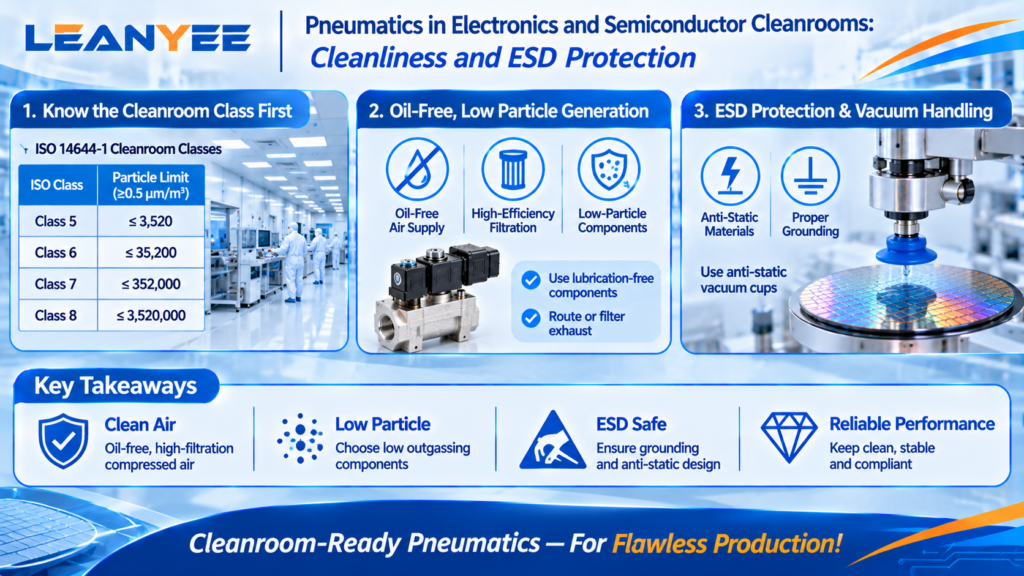 29 Oct, 2026Pneumatics in Electronics CleanroomsPneumatics in Electronics and Semiconductor Cleanrooms: Cleanliness and ESD ProtectionRead Article
-
Leanyee
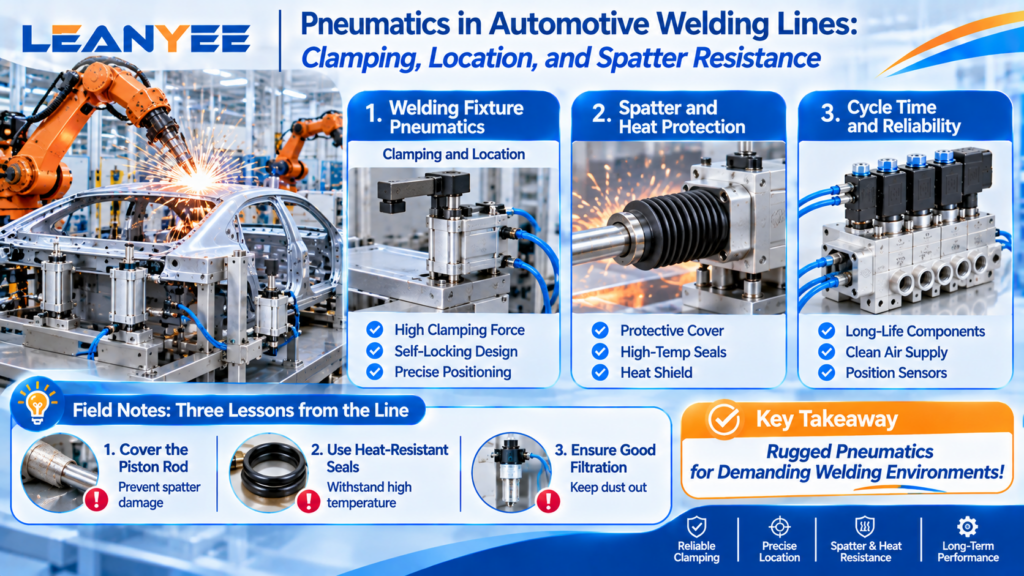 22 Oct, 2026Pneumatics in Automotive Welding LinesPneumatics in Automotive Welding Lines: Clamping, Location, and Spatter ResistanceRead Article
-
Leanyee
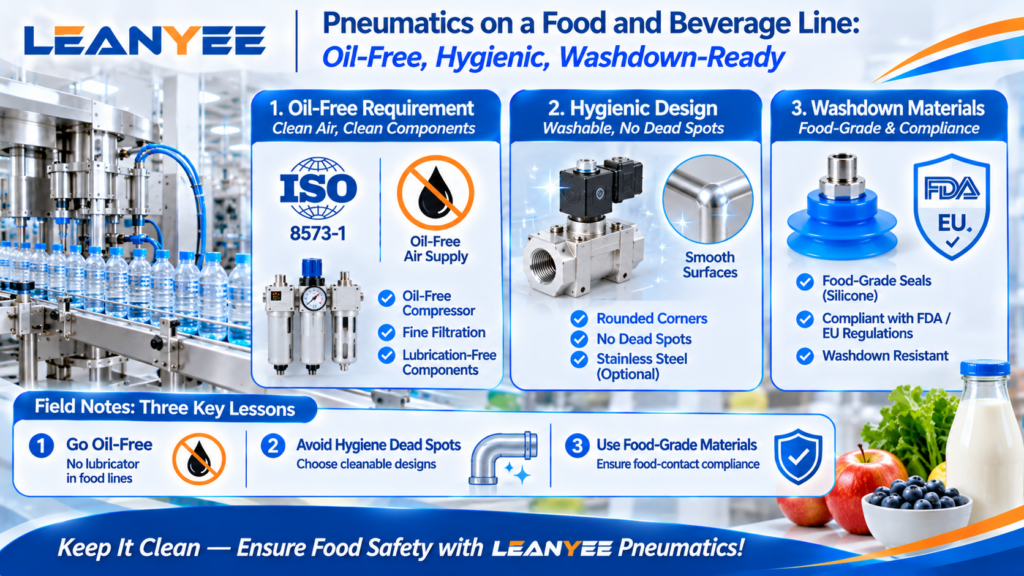 15 Oct, 2026Pneumatics for Food and Beverage LinesPneumatics on a Food and Beverage Line: Oil-Free, Hygienic, Washdown-ReadyRead Article