Pneumatics for Packaging Machinery
Pneumatic Solutions for Packaging Machinery: High Cycle Rates, Light Loads, Fast Cycle Times
-
05 Nov, 2026

-

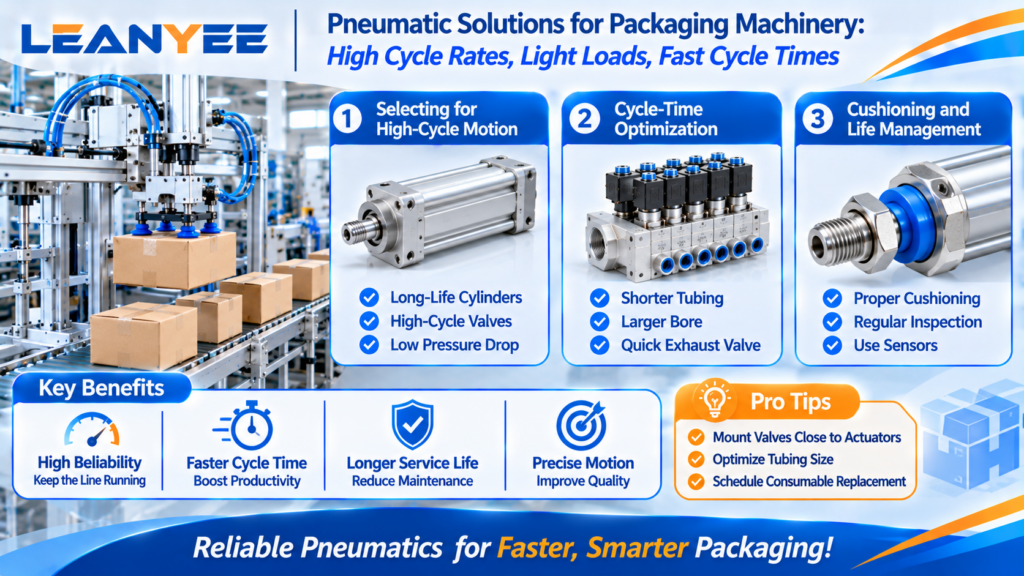
Pneumatic Solutions for Packaging Machinery: High Cycle Rates, Light Loads, Fast Cycle Times
A packaging machine is the classic high-cycle application for pneumatics: tens of thousands of operations a day, cycle times measured in milliseconds, light loads that still have to move fast and settle accurately. The pneumatic solution here is all about high-cycle reliability and cycle-time optimization. This article explains how to specify pneumatics for packaging equipment.
1. Selecting for High-Cycle Motion
Picking, sealing, cutting, and pushing motions on a packaging machine reciprocate at high frequency, so pneumatic components need long life and fast response: cylinders with good cushioning and wear-resistant seals, high-cycle solenoid valves, and tubing and fittings with adequate bore and low pressure drop. Under high-cycle duty, component life is the hard metric.
2. Cycle-Time Optimization
Cycle time is the lifeline of a packaging line. The levers: shorten the tubing (mount the valve close to the actuator), increase bore to cut pressure drop, add a quick exhaust valve to speed up the return stroke, and mount the vacuum ejector close by to speed up pick and release. Save a few tens of milliseconds on every motion and the whole line’s cycle time comes down.
3. Cushioning and Life Management
High-cycle impact is the great enemy of component life. Fit proper cushioning and set the speed sensibly so the cylinder does not hammer at the end of stroke; consumables such as suction cups, seals, and fittings need scheduled inspection and replacement. Use sensors to confirm end position — that prevents false actuation and catches component wear early.
Field Notes: Three Lessons from the Line
- Chasing speed and ignoring cushioning — the cylinder slams into the end stop and life collapses. High-cycle duty needs cushioning even more.
- Tubing too long or bore too small — pressure drop slows every motion. Mount valves close and size the bore properly.
- Consumables not inspected — aged cups and leaking fittings cause dropped parts and false actuation. Replace them on a fixed interval.
Conclusion
The core of packaging-machine pneumatics is reliability at high cycle rates: choose long-life components, optimize the cycle time, and manage cushioning and consumables. Do these three properly and the packaging line runs fast and steady.
Technical Disclaimer
The fitting selection, thread types, and technical parameters discussed in this article are based on applicable international standards, including ISO 4414 (Pneumatic Fluid Power — General Rules and Safety Requirements), ISO 8573 (compressed air quality), ISO 6358 (flow characteristics), and relevant thread standards such as ISO 7-1, ISO 228-1, and ANSI/ASME B1.20.1, together with publicly available technical information from international manufacturers such as SMC, Festo, and Parker.
This article is intended for general technical reference only. Actual performance may be affected by cylinder bore size, load, operating pressure, temperature, piping layout, and other application-specific factors.
On-site testing and commissioning are recommended where necessary. Always refer to the product documentation and technical parameters confirmed by the manufacturer for the specific product being used.
LEANYEE Technical Team
More News & Insights
-
Leanyee
 29 Oct, 2026Pneumatics in Electronics CleanroomsPneumatics in Electronics and Semiconductor Cleanrooms: Cleanliness and ESD ProtectionRead Article
-
Leanyee
 22 Oct, 2026Pneumatics in Automotive Welding LinesPneumatics in Automotive Welding Lines: Clamping, Location, and Spatter ResistanceRead Article
-
Leanyee
 15 Oct, 2026Pneumatics for Food and Beverage LinesPneumatics on a Food and Beverage Line: Oil-Free, Hygienic, Washdown-ReadyRead Article