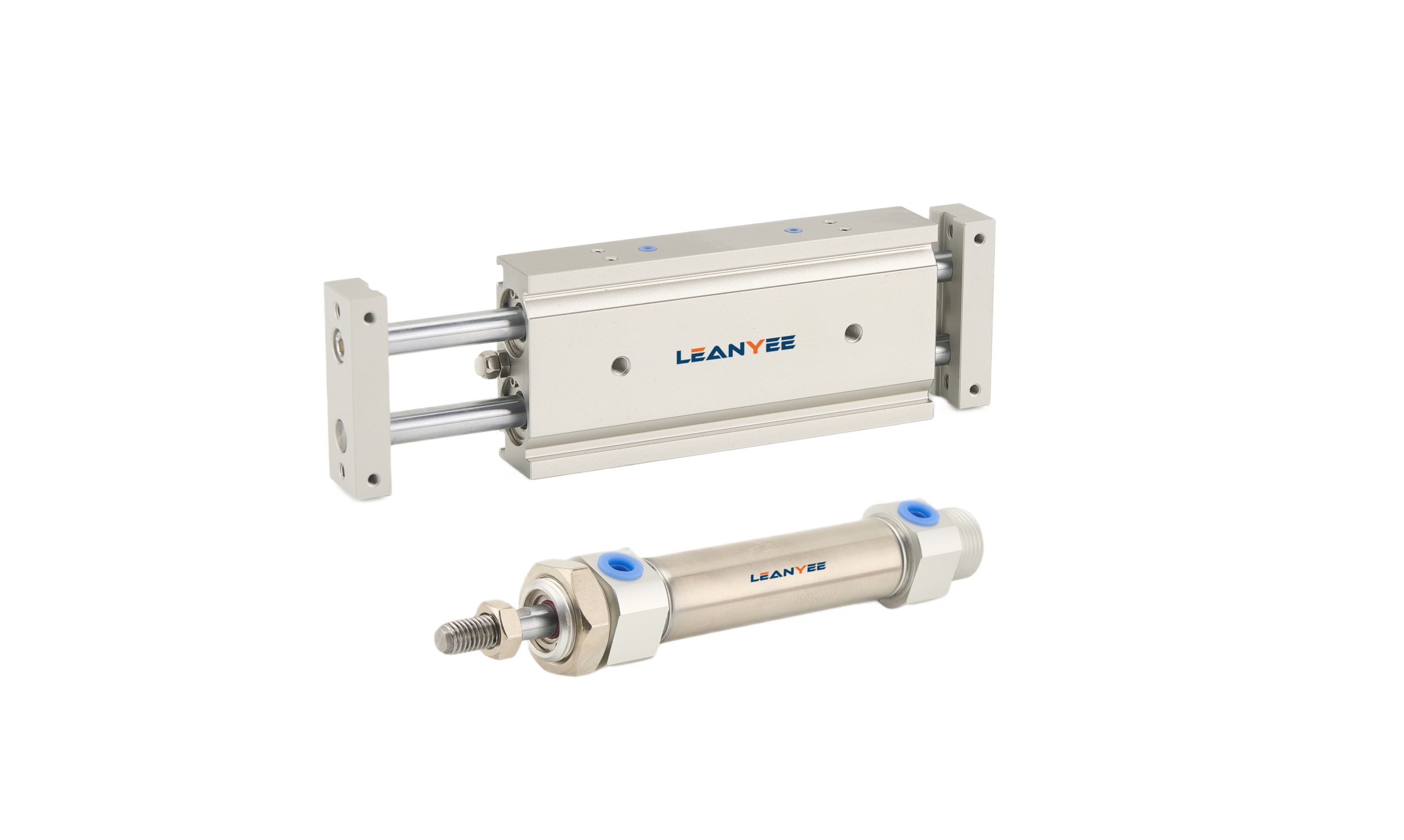
Pneumatics in Explosive Atmospheres ATEX and TR CU
Using Pneumatics in Explosive Atmospheres: ATEX and TR CU Certification Explained at Once
-
17 Sep, 2026

-

Using Pneumatics in Explosive Atmospheres: ATEX and TR CU Certification Explained at Once
In dust or flammable-gas environments, any electrical spark can be the detonator. Pneumatic components produce no spark and are a natural fit for hazardous areas — but “just use pneumatics” is not enough: the area classification and the certification marks both have to be right. This article explains how to select pneumatics for hazardous areas and how to read the certificates.
1. How Hazardous Areas Are Classified
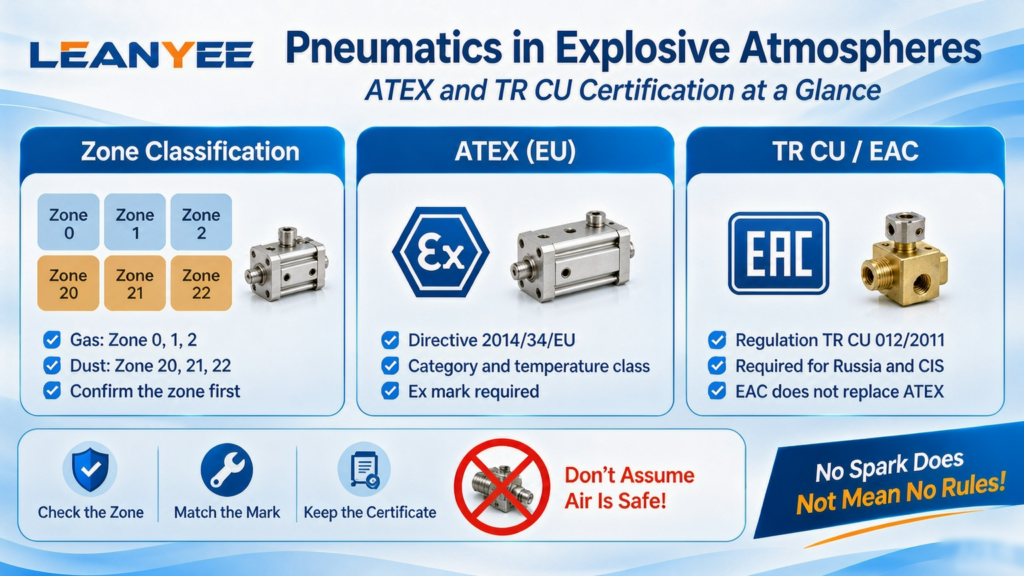
Hazardous areas are classified by how likely a hazard is to be present: gas atmospheres are divided into Zone 0 / 1 / 2 (Zone 0 is the most severe, with explosive gas present continuously), and dust atmospheres into Zone 20 / 21 / 22. The higher the zone number category, the stricter the equipment requirements. Before selecting pneumatic components, confirm which zone the site belongs to.
2. The Explosion-Protection Advantage of Pneumatics
Pneumatic components are driven by compressed air: no sparks, no arcs — a natural choice for hazardous areas. Cylinders, air motors, pneumatic fixtures, and vacuum grippers can all be used safely in explosive atmospheres. But they are not “universally exempt”: static electricity, frictional heating, and exhaust temperature still have to be considered, and the components themselves must meet the applicable explosion-protection requirements.
3. Reading ATEX and TR CU Marks
| Certification | Region | Mark | Notes |
| ATEX | European Union | Ex mark | EU Explosive Atmospheres Directive 2014/34/EU; equipment is assigned to categories |
| TR CU (EAC) | Eurasian Economic Union (incl. Russia) | EAC mark | Customs Union technical regulation TR CU 012/2011; commonly required for exports to Russian-speaking markets |
For exports to the EU, look for the ATEX Ex mark; for Russia and the CIS, look for the EAC (TR CU) mark. The marking normally carries the type of protection, category, and temperature class, so match it against the site zone and the gas or dust type during selection, and insist on the corresponding certificate. (Explosion-protection certificates for the relevant LEANYEE products will be available for download once the website launches.)
Field Notes: Three Lessons from the Line
- Assuming “pneumatic means inherently explosion-proof” — static electricity and hot exhaust are overlooked. Hazardous areas still require certified components.
- Checking only whether an Ex mark exists, not the zone or group — a mismatch with the site is still non-compliant. Compare against the actual zone.
- Exporting to Russia without EAC — EU certification does not replace EAC. Russian-speaking markets require the TR CU mark.
Conclusion
Pneumatics win in hazardous areas because there is no spark, but compliance comes from “know the zone + know the certificate”. Confirm the hazardous area, then select by ATEX (EU) or EAC (Russian-speaking markets) marking, and safety is properly assured.
Suggested Illustrations
- Hazardous area classification (Zone 0/1/2 and 20/21/22).
- How to read the ATEX Ex mark and the EAC mark.
- Pneumatic components applied in an explosive-atmosphere application.
The above content was compiled by the LEANYEE pneumatic technical team from hands-on commissioning experience, for reference by industry peers.
Technical Disclaimer
The fitting selection, thread types, and technical parameters discussed in this article are based on applicable international standards, including ISO 4414 (Pneumatic Fluid Power — General Rules and Safety Requirements), ISO 8573 (compressed air quality), ISO 6358 (flow characteristics), and relevant thread standards such as ISO 7-1, ISO 228-1, and ANSI/ASME B1.20.1, together with publicly available technical information from international manufacturers such as SMC, Festo, and Parker.
This article is intended for general technical reference only. Actual performance may be affected by cylinder bore size, load, operating pressure, temperature, piping layout, and other application-specific factors.
On-site testing and commissioning are recommended where necessary. Always refer to the product documentation and technical parameters confirmed by the manufacturer for the specific product being used.
LEANYEE Technical Team
More News & Insights
-
Leanyee
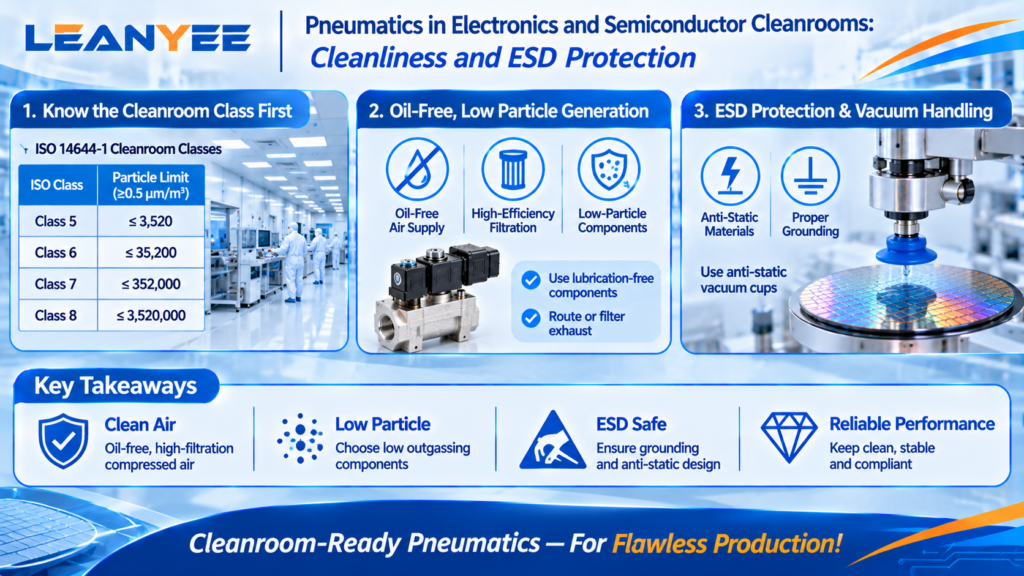 29 Oct, 2026Pneumatics in Electronics CleanroomsPneumatics in Electronics and Semiconductor Cleanrooms: Cleanliness and ESD ProtectionRead Article
-
Leanyee
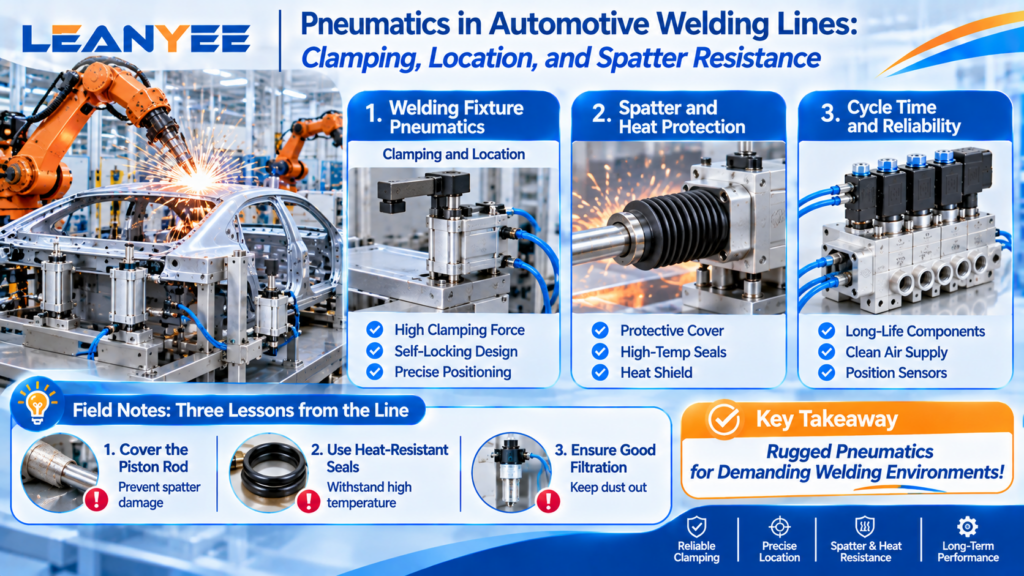 22 Oct, 2026Pneumatics in Automotive Welding LinesPneumatics in Automotive Welding Lines: Clamping, Location, and Spatter ResistanceRead Article
-
Leanyee
 15 Oct, 2026Pneumatics for Food and Beverage LinesPneumatics on a Food and Beverage Line: Oil-Free, Hygienic, Washdown-ReadyRead Article