When to Use an Air Motor
When to Use an Air Motor: Selecting the "Rotating Cylinder" and Its Advantages
-
22 Dec, 2025

-

When to Use an Air Motor: Selecting the “Rotating Cylinder” and Its Advantages
When you need continuous rotation with frequent starts and stops — or the environment is flammable, explosive, wet, or hot — the “rotating cylinder”, the air motor, is often easier to live with than an electric motor. It outputs rotation, but its character is entirely different from a motor: soft characteristics, stall-tolerant, and it won’t burn out. This article covers types, characteristics, and selection.
1. Two Families of Air Motor: Vane vs Piston
| Type | Speed | Torque | Characteristics |
| Vane | High speed (up to tens of thousands of rpm) | Relatively small | Simple structure, compact, high speed |
| Piston | Low speed | High torque | Low-speed high torque, strong starting torque |
High speed with light loads → vane; low speed with heavy loads → piston. An air motor can also be paired with a gearbox to multiply torque and reduce speed further.
2. “Soft Characteristics” and Stall Tolerance
The air motor is classically soft in character: as the load grows, speed automatically falls; on overload it simply stalls — without burning out. That is a major advantage over electric motors. Where frequent starting/stopping and reversing are required, the air motor has none of the motor’s inrush current or overheating problems, so it lasts longer.
Torque varies with speed: at selection, match the “speed + torque at the actual operating point” against the catalog’s characteristic curves — don’t just read the free (no-load) speed or the stall torque.
3. The Edge in Explosion Protection and Harsh Environments
An air motor produces no electric spark, so it is naturally suited to explosion-proof and flammable environments; it also works long-term in wet, hot, and dusty conditions. Running on compressed air, it generates no electric heat — ideal for mining, chemical, and spray-painting settings.
The price: high air consumption, relatively low energy efficiency, and a need for clean, well-lubricated air (or a lube-free model).
Field Notes: Three Lessons from the Line
- Selecting by free speed alone — under real load the speed drops a lot. Match the operating-point torque against the characteristic curve instead.
- Wet or oily air supply — a vane motor rusts and sticks inside. Fit filtration and lubrication upstream (or choose a lube-free model).
- Restricted exhaust — high exhaust back pressure caps the speed. When fitting a silencer on the exhaust port, don’t choose one with too small a flow rating.
Conclusion
The air motor’s value lies in “soft characteristics, stall tolerance, no burnout, natural explosion protection”. Match the speed and torque at the actual operating point against the characteristic curves, and get the air filtration and lubrication right — then it shines wherever electric motors are awkward to use.
Suggested Illustrations
- Cutaway comparison of vane and piston air motor structures.
- Speed–torque characteristic curve with the operating point marked.
- Field photo of an air motor in an explosion-proof application.
The above content was compiled by the LEANYEE pneumatic technical team from hands-on commissioning experience, for reference by industry peers.
Technical Disclaimer
The fitting selection, thread types, and technical parameters discussed in this article are based on applicable international standards, including ISO 4414 (Pneumatic Fluid Power — General Rules and Safety Requirements), ISO 8573 (compressed air quality), ISO 6358 (flow characteristics), and relevant thread standards such as ISO 7-1, ISO 228-1, and ANSI/ASME B1.20.1, together with publicly available technical information from international manufacturers such as SMC, Festo, and Parker.
This article is intended for general technical reference only. Actual performance may be affected by cylinder bore size, load, operating pressure, temperature, piping layout, and other application-specific factors.
On-site testing and commissioning are recommended where necessary. Always refer to the product documentation and technical parameters confirmed by the manufacturer for the specific product being used.
LEANYEE Technical Team
More News & Insights
-
Leanyee
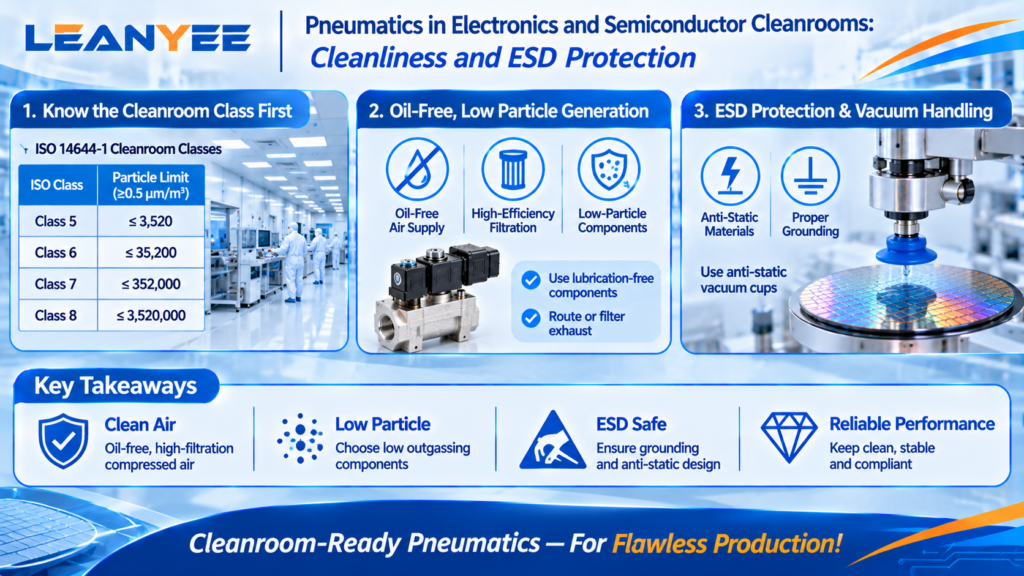 29 Oct, 2026Pneumatics in Electronics CleanroomsPneumatics in Electronics and Semiconductor Cleanrooms: Cleanliness and ESD ProtectionRead Article
-
Leanyee
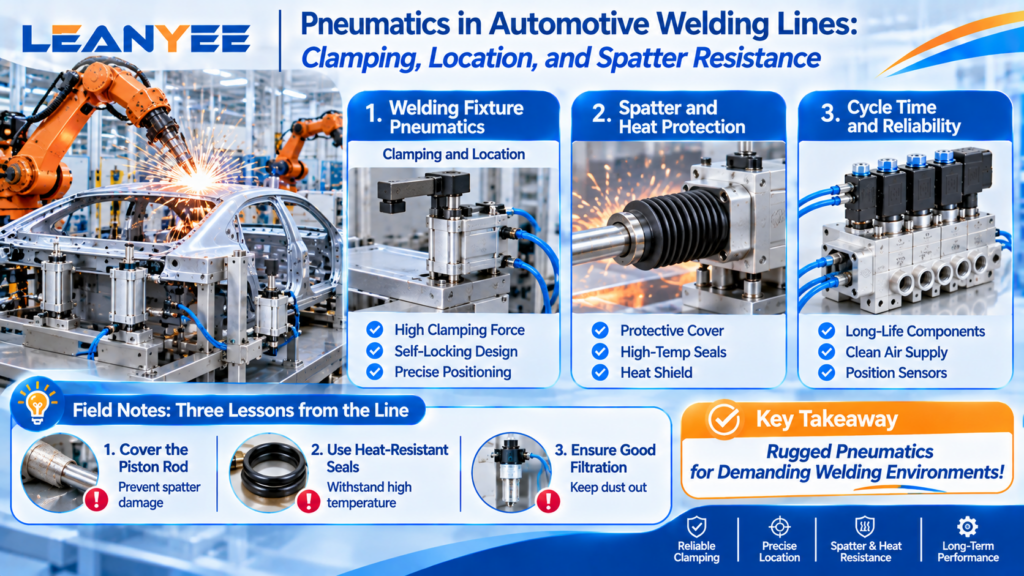 22 Oct, 2026Pneumatics in Automotive Welding LinesPneumatics in Automotive Welding Lines: Clamping, Location, and Spatter ResistanceRead Article
-
Leanyee
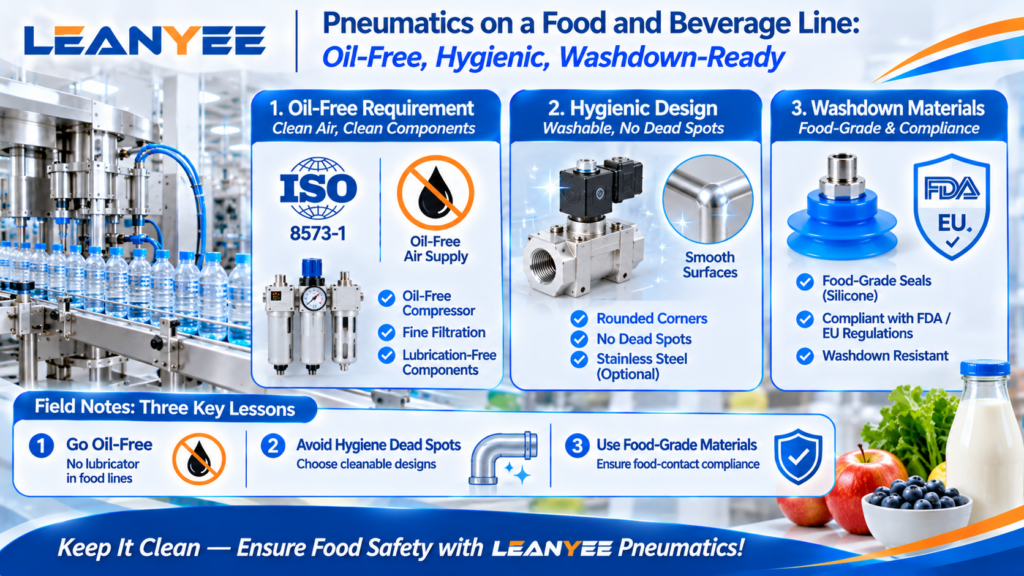 15 Oct, 2026Pneumatics for Food and Beverage LinesPneumatics on a Food and Beverage Line: Oil-Free, Hygienic, Washdown-ReadyRead Article